"In the end, you're left with a fee of $500 a month and a need of $800 a month. It's just not sustainable." Eric Churchill, executive vice president of Needham-based Schernecker Property Services, used that example in an April Boston Globe report on condo associations that keep monthly fees too low to maintain their buildings. The article was prompted by a federal mortgage change. It noted that if Freddie Mac followed Fannie Mae, every condo association in the country would likely consider raising its monthly fees.
In Back Bay, the rule is narrower than that suggests. Two filters decide whether it touches a given purchase. The first is how many units the building has. The second is whether the buyer's loan is small enough to be sold to Fannie Mae or Freddie Mac. A large part of the neighborhood's condo stock fails one filter or the other, so the rule mostly lands on one slice of the market: units in larger buildings, financed with conforming loans.
The date on the loan application is what counts
On March 18, 2026, Fannie Mae issued Lender Letter LL-2026-03. It raised the minimum replacement-reserve allocation from 10% to 15% of a condo association's annual budgeted assessment income. Other reserve and budget-adequacy requirements stayed the same. Lenders must apply the new minimum under Fannie's Full Review process "for all loan applications dated on or after Jan. 4, 2027." Freddie Mac matched the change the same day in Bulletin 2026-C, using the same Jan. 4, 2027 application threshold.
The trigger matters for timing. It is the application date, not the closing date. As of this week, the cutoff is a little over ten weeks away. A buyer who signs a purchase agreement in December but files a mortgage application on or after Jan. 4 is held to the new standard.
The same lender letter also made two changes that are already in effect, and they get less attention than the January date:
- August 3, 2026: Limited Review retired. Established projects that used to qualify for Fannie's lighter Limited Review must now go through Full Review, or through the Waiver of Project Review process if they are eligible for it.
- August 3, 2026: reserve studies tightened. An association can still use a reserve study in place of the percentage test. But the lender must confirm that the budget includes the study's highest recommended reserve allocation, and the baseline funding method is no longer allowed.
- January 4, 2027: the 15% minimum. It applies to Full Review for applications dated on or after that day.
Taken together, these changes mean the Full Review that carries the 15% test now covers established buildings that, before August, could have avoided it through Limited Review. A Back Bay building that went through financing easily in 2025 may face a stricter review in 2027, even if nothing about the building has changed.
A rule built for big buildings, in a neighborhood of small ones
Fannie Mae's Waiver of Project Review table is the part of this story that matters most in Back Bay. Project review is waived for units in two- to four-unit condo projects, both new and established. It is also waived for five- to ten-unit projects that are not part of a larger development or master association. Freddie Mac's March bulletin likewise expanded its "Exempt from Review" category to projects with two to ten units, with a similar condition about master associations for the five- to ten-unit group.
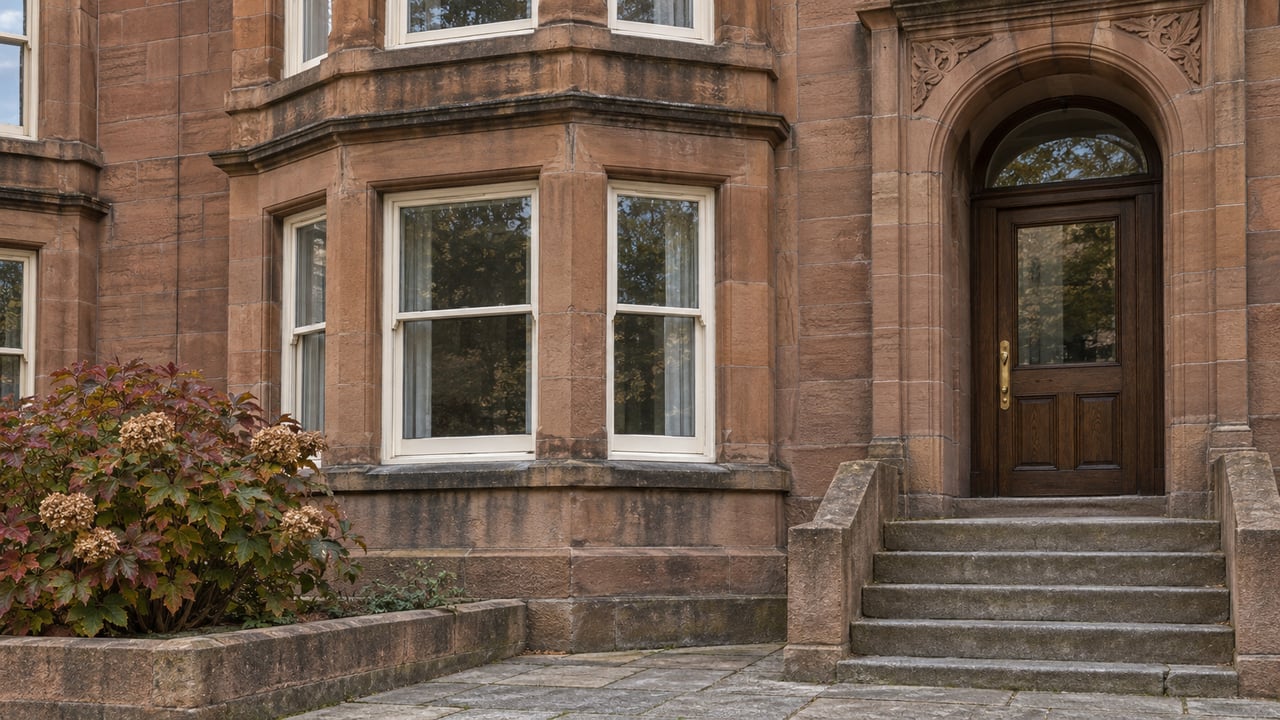
Back Bay's housing ranges from converted rowhouses with what New England Condominium calls "intimate condo associations" to large cooperative and luxury high-rise properties. Three buildings recorded by the historical research site Back Bay Houses show how the size threshold sorts them:
| Building | Units | Fannie Mae review path |
|---|---|---|
| A typical three- or four-unit brownstone conversion | 2 to 4 | Review waived |
| 20 Gloucester | 8 | Waived if not part of a larger development or master association |
| 191 Commonwealth | 16 | Full Review, including the 15% test |
| Carlton House, 2 Commonwealth | 53 residential, 1 commercial | Full Review, including the 15% test |
A waiver does not remove every requirement. Even when project review is waived, Fannie still applies property eligibility rules, insurance requirements, priority of common expense assessments, appraisal standards, and a bar on projects that are terminating or in insolvency proceedings. What the waiver does remove is the budget test. A four-unit association on Marlborough Street with a thin reserve line is not measured against the 15% minimum. A 16-unit building on Commonwealth Avenue is.
The second filter is the loan amount
Fannie Mae and Freddie Mac rules only govern loans sold to Fannie Mae and Freddie Mac. The Federal Housing Finance Agency's 2026 conforming limit for a one-unit property in Suffolk County is $962,550. Under FHFA's definition, a loan above that limit is a jumbo loan, and the test is the size of the mortgage, not the purchase price. The agency had not yet published 2027 limits as of mid-October.
The median Back Bay condo sale for January through September 2026 was $1.4 million, according to the Massachusetts Association of Realtors' September 2026 Local Market Update. To keep a loan at or under $962,550 at that price, a buyer would need to put down at least $437,450 before closing costs. Above the median, most purchases either carry jumbo financing or involve a down payment large enough to keep the loan conforming. A jumbo loan's condo review is set by that lender, not by these rules.
The rule therefore applies most directly to units in buildings with more than ten units, or five to ten units within a master association, priced so the buyer's loan stays conforming. In Back Bay, that usually means the smaller, lower-priced units in larger buildings: studios, one-bedrooms and some two-bedrooms in full-service and mid-size associations. For buyers in that segment, the building's budget has become part of the mortgage file.
The Globe's April report described the downside. If buyers cannot get a Fannie Mae or Freddie Mac loan on a condo, they need a different and more expensive loan. That can lower the unit's value or lead buyers to look elsewhere. At the same time, the same article noted that experts believed most associations already set fees too low before the rule changed. For an association with a short reserve line, the realistic options under the rule are to raise the budget allocation, or to commission a reserve study and fund its highest recommended allocation.
Why the September numbers raise the stakes
On their own, the September 2026 figures look like a strong month. Back Bay recorded 29 condo closings, up from 17 a year earlier, and the median sale price rose 63.7% to $1,825,000. The same report warns that one month of activity can look extreme because the sample is small. For January through September, the median fell 3.0% from 2025, from $1,443,750 to $1,400,000.
The forward-looking numbers point the other way. Pending condo sales in September 2026 were 11, half of the 22 a year earlier. There were 170 active listings, which equals 6.9 months of supply. Cumulative days on market for the year reached 71, up from 66 in 2025. Sellers received 95.9% of original list price, a figure MAR notes does not account for seller concessions.
In a market with nearly seven months of supply and slowing new contracts, a buyer in the conforming-loan segment has time to compare buildings. If a lender raises a question about one building's reserves in January, that buyer has other options to consider. For an owner in a larger building who plans to sell in early 2027, the association's budget is now part of how the unit competes. Any buyer whose mortgage application is dated on or after Jan. 4 falls under the new standard, regardless of when the listing came on the market.
A few questions this raises
Does the rule require an association to hold 15% of its budget in the bank? No. The requirement concerns the share of the annual budget allocated to replacement reserves. A reserve study can substitute for the percentage test if the budget funds the study's highest recommended allocation and the study does not use baseline funding.
If my brownstone has four units, does any of this apply? Fannie Mae waives project review for two- to four-unit projects, so the 15% budget test does not apply. Insurance, assessment-priority and property eligibility requirements still do.
Is the January date in the official guides? Fannie Mae's August 5, 2026 Selling Guide announcement incorporated LL-2026-03 into the Selling Guide, and Freddie Mac's future-effective Guide section carries the Jan. 4, 2027 date. A lender can confirm which version applies when an application is taken.
This post is general information, not legal, tax or financial advice. Your lender, your association's manager or a condominium attorney can confirm how these rules apply to a particular building and loan.
If you own in a larger Back Bay building and are thinking about a sale next year, or if you are comparing units where the loan would stay under the conforming limit, Kathleen Murphy Group can help you review the association's budget alongside the rest of the decision before the January date arrives.